For most Central Texas homes, a heat pump is the more efficient choice, because our winters are short and mild and a heat pump both heats and cools from one system. A gas furnace makes more sense if you already have cheap natural gas, you want the hottest possible air on the coldest nights, or you are keeping a working AC and only replacing the heat side. For a lot of homes around here the best answer is actually both: a dual-fuel system that runs the heat pump most of the winter and lights the furnace only when it turns truly cold.
This is a 15-year decision, so it deserves a real answer instead of whatever the installer stocks the most of. Here is the honest version: how each one heats, what each costs to run in a Texas winter, and how to tell which one your house actually wants.
The short version, side by side
If you only read one thing, read this table. The rest of the page is why.
| Heat Pump | Gas Furnace | |
|---|---|---|
| How it heats | Moves heat from the outside air | Burns natural gas or propane |
| Also cools? | Yes, one system heats and cools | No, it needs a separate AC |
| Efficiency | Very high in mild weather | High, but it burns fuel |
| Coldest nights | Leans on backup heat below freezing | Strong down to any Texas low |
| Runs on | Electricity | Gas (or propane out in the county) |
| Best for | All-electric homes, efficiency, one system | Cheap-gas homes, keeping the AC |
The "best for" row is the whole decision in miniature. Which one describes your house?
How a heat pump heats, and why it fits here
A heat pump does not make heat. It moves it. Even on a 40-degree morning there is heat energy in the outside air, and a heat pump's job is to pull that warmth in and drop it into your house. In summer it runs the other direction and does exactly what an AC does. One outdoor unit, one system, both seasons.
That "moving instead of making" is the trick, and it is why a heat pump is so efficient: it delivers roughly two to three units of heat for every unit of electricity it draws, because it is not fighting to create heat, just relocating it. In a climate like ours, where winter is a handful of genuinely cold weeks and a lot of mild ones, that efficiency is at its best exactly when you use it most. A Texas cold front is 55 degrees and everyone acts like it is Finland. A heat pump is right at home in that.
How a gas furnace heats
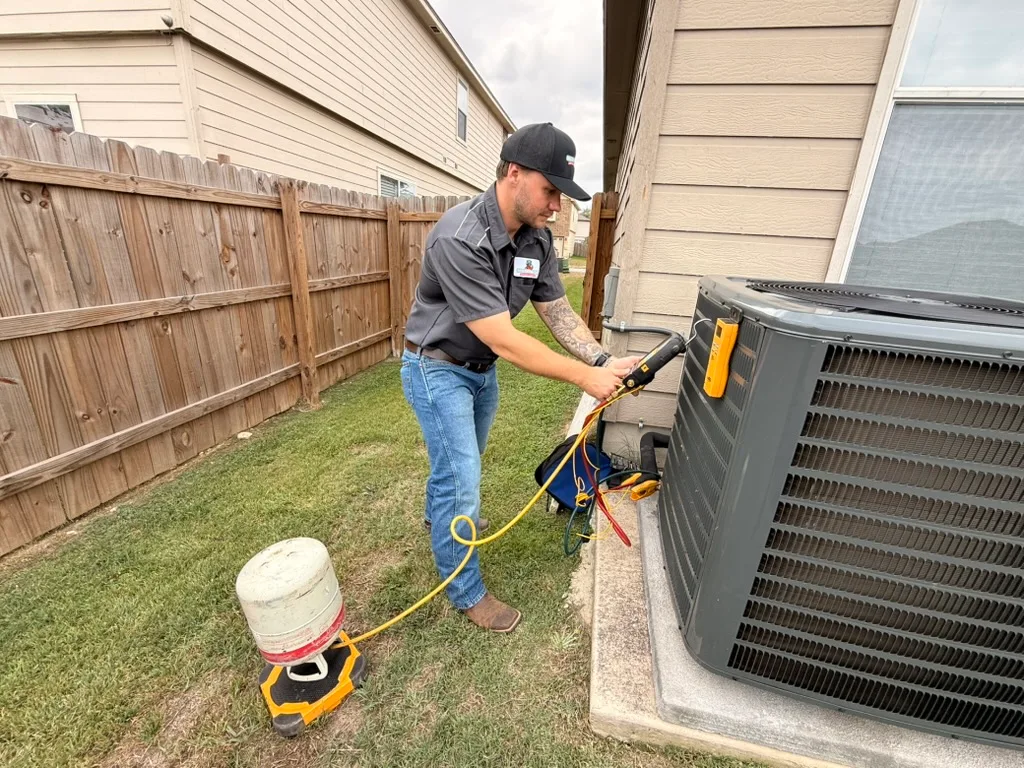
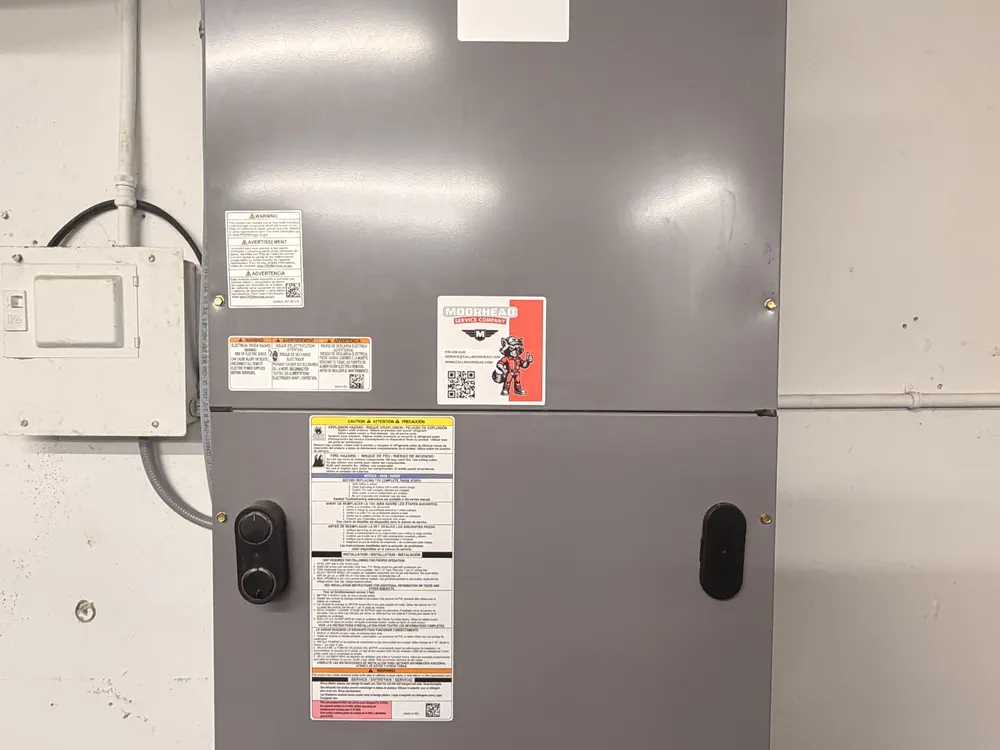
A gas furnace is the traditional setup: it burns natural gas (or propane on a rural property) in a sealed chamber, a heat exchanger warms the air, and the blower pushes it through your ducts. The air off a gas furnace comes out hotter than a heat pump's, which some people genuinely prefer on a cold morning, and it does not care how cold it gets outside. Twenty degrees, ten degrees, it produces the same strong heat.
The catch is that it only heats. You still need a separate air conditioner for the other nine months, and burning fuel means combustion, a flue, and a carbon monoxide detector you actually keep working. None of that is a dealbreaker. It is just the honest full picture.
Which is cheaper to run in a Texas winter?
Usually the heat pump, and here is the honest reasoning rather than a slogan. Our heating season is short. For most of it, temperatures sit in the range where a heat pump is at its most efficient, so it heats the house for a fraction of the energy a furnace burns. The furnace only pulls ahead on the coldest nights, when the heat pump has to call on its backup electric heat strips, which are not efficient at all.
Where it flips is the price of gas. If you have cheap natural gas service, a furnace's running cost on those few cold weeks can undercut a heat pump leaning on backup heat. Out in the Hill Country on propane, that math usually favors the heat pump again, because propane is not cheap. The point is that the answer depends on your actual utility rates, and any company that quotes you one without asking what you pay for power and gas is guessing. While we are on running costs, a lot of what shows up on a winter bill is the same efficiency story we lay out for summer in why your electric bill runs high.
The Texas winter question: hard freezes and dual fuel
Here is the fair worry about heat pumps: what about the freeze? When the temperature really drops, a standard heat pump loses efficiency and falls back on those electric backup strips, and a hard, days-long freeze is exactly when that costs the most. We watched that play out during Winter Storm Uri in February 2021, when the grid itself failed and 246 Texans died. Nobody around here needs a reminder that our winters, while short, can turn dangerous.
That is precisely the case for a dual-fuel system, and it is what we put in a lot of Central Texas homes. You pair a heat pump with a gas furnace on the same system. The heat pump handles the mild majority of winter cheaply, and when the temperature drops past a set point, the system hands off to the gas furnace for strong, reliable heat. You get the efficiency most of the time and the muscle when it counts. It is the best of both, and for many homes it is the honest right answer instead of picking a side.
What it costs to install, and what we put in
A heat pump and a gas-furnace-plus-AC setup land in a similar overall range once you count both the heating and cooling sides, because a furnace still needs an air conditioner beside it. The real number depends on your home's size, your ductwork, and the efficiency tier you choose, which is why we quote it flat and in writing after a load calculation instead of off a chart. You can see the actual systems we install, good, better, and best, with all-in installed pricing, on our HVAC systems page (the Dual Fuel option there is exactly the heat-pump-and-furnace pairing this article is about).
Whichever way you lean, the size matters more than the badge. An oversized system short-cycles, never pulls humidity, and wears out early. We measure the house and size it to that, not to the installer's schedule. And if your current system is repairable and worth repairing, we will tell you that too, the same way we walk through it in the repair-versus-replace guide.
So which should you get?
Lean heat pump if your home is all-electric or has no gas line, if efficiency and a single system for both seasons appeal to you, or if you are replacing the AC and the furnace at the same time anyway. Lean gas furnace if you already have cheap natural gas, you strongly prefer the hotter air, or your AC is fine and you only need to replace the heat side. And seriously consider dual fuel if you want the efficiency of a heat pump without giving up furnace-grade heat in a hard freeze, which describes a lot of Central Texas homes.
A heat pump is usually the more efficient pick in Central Texas because our winters are mild and it both heats and cools from one system. A gas furnace makes the hottest air and shrugs off a hard freeze, but it only heats. For many homes the smartest answer is dual fuel: the heat pump for the mild majority of winter, the furnace for the coldest nights. Size it with a real load calculation, and match the choice to your actual gas and electric rates.
Trying to decide for your home in New Braunfels, Seguin, or the Hill Country? We will run the load calculation, lay the honest payback math in front of you, and tell you which one we would put in our own house. Call (830) 587-5790 or get a quote online. You can also compare the heating and cooling options directly.