Your summer electric bill spikes because your air conditioner is doing most of the work - in a Texas summer the AC alone is more than half the bill. It runs higher than it should when the system works harder than it needs to: a dirty filter or coil, low refrigerant from a slow leak, leaky ducts, an aging unit, or a thermostat set too low all force longer cycles and a bigger draw, on top of higher summer rates.
When it is 100 degrees out, your AC runs almost constantly, and that base load is most of the bill no matter what. The question worth asking is whether it is running harder than it has to - because that part you can do something about.
Why your bill is higher than it should be
- Running constantly in the heat. The unavoidable one. In a Texas summer the AC is the bill's biggest driver, full stop.
- A dirty filter or dirty coils. Choke the airflow and the system runs longer for the same cooling. The Department of Energy pegs the efficiency hit from a clogged filter at up to 15 percent.
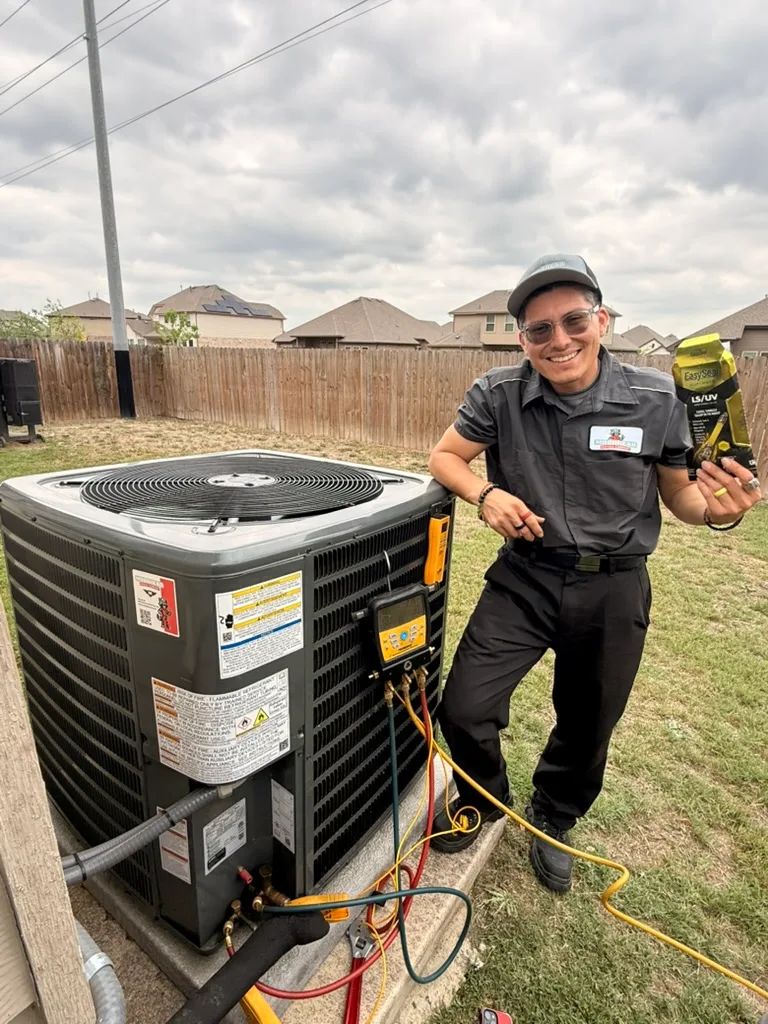
- Low refrigerant from a slow leak. An undercharged system runs longer cycles and draws more power per hour, because the compressor is working harder to move less. The cause is a leak, not a need for a top-off.
- An old, low-efficiency unit. A 10-to-15-year-old system at SEER 10 to 13 burns far more electricity than a modern SEER2 unit for the same cooling.
- The thermostat set too low, with no setback. Holding 70 all day, including the hours nobody is home, runs the system far more than it needs to.
- Leaky ducts. ENERGY STAR estimates a typical home loses 20 to 30 percent of its conditioned air through duct leaks - you are paying to cool the attic.
- Short-cycling or an oversized unit, plus other loads - a pool pump, an electric water heater - and seasonal rate increases on top of it all.
The quiet bill-inflator: a neglected or leaking AC
Here is the one the power company will never tell you, because it is not their problem to solve: your bill can climb for months before the AC ever fails to cool. The house still feels fine. It just costs more.
A customer in Cibolo called us about an AEP bill that had jumped $140 over the same month the year before - not because the AC had stopped working, but because it had not. The system was running and cooling fine. The problem was a slow refrigerant leak at a Schrader valve, and the compressor had been working twice as hard to move half the refrigerant it needed, running longer cycles and drawing more power per hour, for about four months. The repair was $220 flat. The bill dropped back within 30 days. They had quietly paid an extra $140 a month - about $560 - before the call. That is the whole argument for annual maintenance, put plainly: finding it late costs more than finding it early.
What you can do today
- Set the thermostat smarter. 78 degrees when you are home, a few degrees higher when you are out. Each degree up trims roughly 1 to 3 percent off cooling cost, and a setback while you are away can save around 10 percent over a season. Do not push past about 85, or the system stops pulling humidity and the house feels worse.
- Change the filter every one to three months.
- Close blinds and seal the leaks at windows and doors so you are not cooling the outdoors.
- Put the pool pump on a timer and check your electricity plan's off-peak window.
When it is worth calling a pro
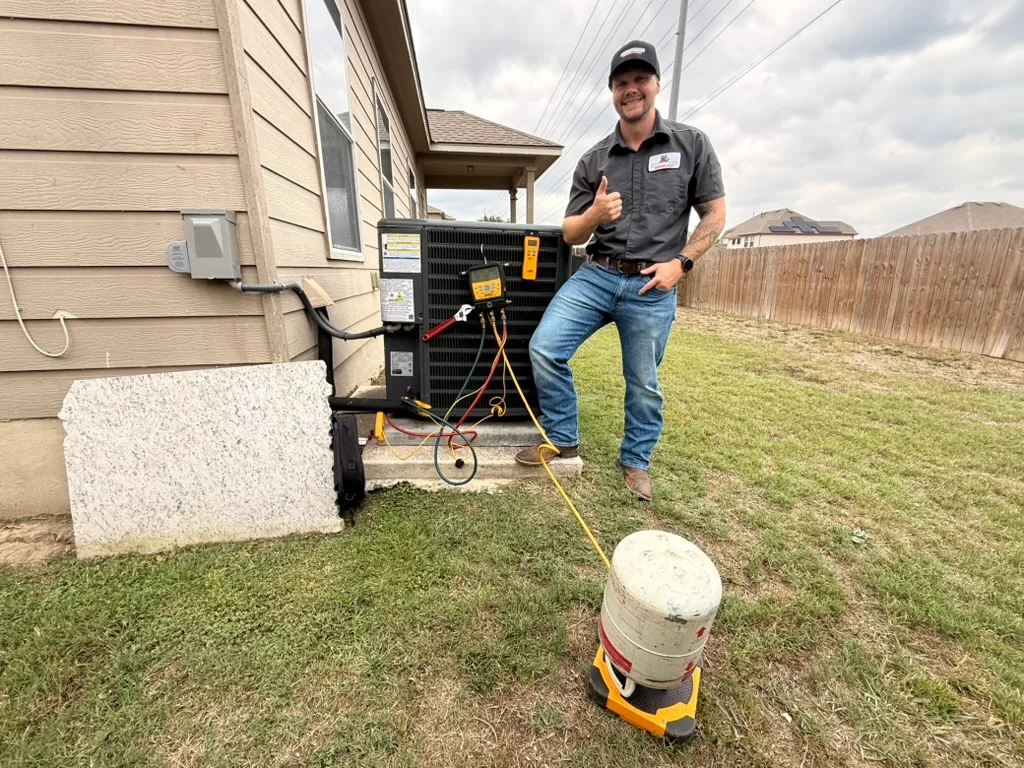
If the bill keeps climbing with no change in your habits, the system is usually the reason. A tune-up cleans the coils and checks the charge; a leak check finds the slow leak before it costs you another four months. We find and fix leaks - we do not just recharge and leave, because recharging a leaking system is billing for a problem, not fixing it. Leaky ducts are their own fix, and a smart thermostat takes the setback off your to-do list.
Should you replace it?
If the unit is old and inefficient, a high-efficiency replacement is the bigger lever - a modern SEER2 system can cut cooling costs by roughly 30 to 40 percent over an old SEER 10-to-13 unit. That does not make replacement automatically right, but once a system is 10-plus years old and repairs start clearing half the cost of a new one, the math tips. We walk through exactly when in our repair-vs-replace guide.
Why summer bills hit harder in New Braunfels
Down here the AC is not a contributor to the summer bill - it is most of the bill, well over half in the worst months. Which is exactly why a system running 10 percent harder than it should costs real money here, not pennies. On top of that, AEP Texas delivery charges ride on every bill, summer demand pushes rates up in the afternoon peak, and running heavy loads in the off-peak window - typically overnight - softens the blow a little.
Your AC is most of the summer bill, and it climbs higher than it should when it is dirty, low on refrigerant, or old. Set the thermostat to 78 with a setback, change the filter, and if the bill keeps rising with no change in habits, get the system checked - a slow leak or dirty coils quietly cost more every month than the repair would.
Bill climbing and you cannot explain it, anywhere around New Braunfels or Seguin? Call (830) 587-5790 or book a visit online.