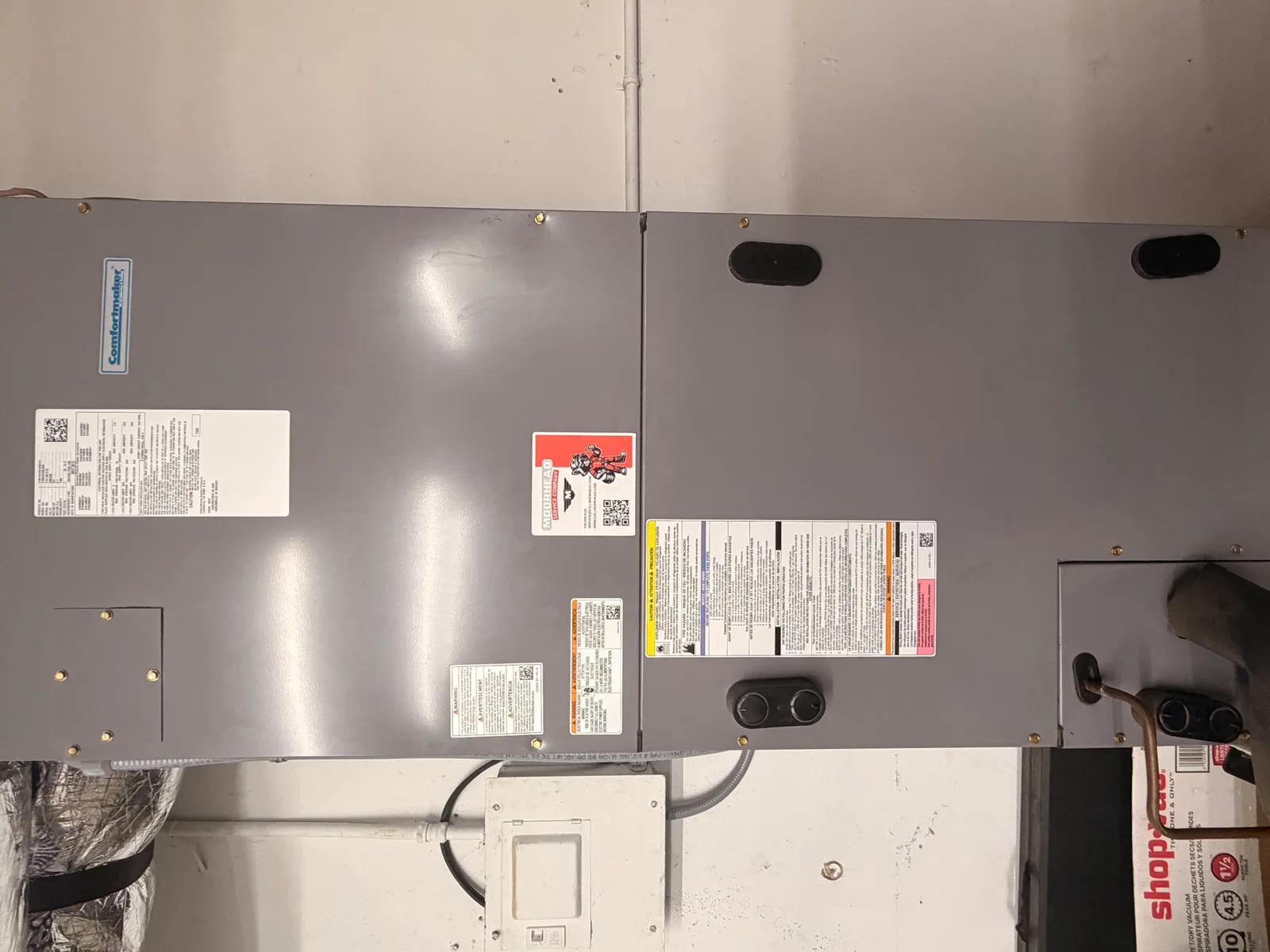
Yes - an annual AC tune-up is worth it, because a maintained system runs more efficiently, breaks down far less, and lasts years longer than a neglected one. In Texas, where your AC runs close to half the year, once a year is the floor and twice a year - spring for cooling, fall for heating - is the smarter call.
You are right to wonder whether a tune-up is real or just a sales call with a clipboard. Plenty of them are the second thing. So here is what a real one actually includes, the honest case for the money, and exactly how to tell a measured tune-up from a checkbox scam.
What's actually in an AC tune-up
A real tune-up is a measured inspection, not a glance. Ours is a 21-point service, and the tech writes the numbers down - refrigerant readings, the capacitor's microfarad value, the temperature split across the coil. The short version of the list:
- Clean and inspect the outdoor condenser coil and the indoor evaporator coil
- Check the refrigerant charge and look for leaks
- Test the capacitor and the contactor, and tighten the electrical connections
- Measure the blower motor's amp draw before it wears out
- Clear and treat the condensate drain line
- Check the filter, calibrate the thermostat, and measure the temperature split
- Test the safety controls and verify the system is performing to spec

Is it worth it - or is it just an upsell?
Honest answer to an honest worry. Justin spent years at a big franchise shop before starting Moorhead, and the training there was not about reading a system - it was about tiered pricing menus and getting you to point at the middle option. That is the whole reason this company is flat-rate and owner-run. So the skepticism is fair; the tune-up is still worth it. Here is why.
Efficiency. The U.S. Department of Energy puts the efficiency hit from a clogged filter alone at up to 15 percent. Dirty coils and a low charge stack on top of that. A system running 10 or 15 percent harder than it should is money you pay every month for the same comfort.
The cheap fix before the expensive failure. The most common summer breakdown around here is a failed run capacitor - a part the size of a soup can. Justin carries six of them on the truck in different ratings, because they fail in heat, always in heat, on the hottest Friday of July when the attic is 130 degrees and the family is home. Catch that capacitor on a spring tune-up and it is a quiet 40-minute fix. Miss it, and it can take the compressor - the most expensive part in the system - down with it on the worst possible afternoon.
Lifespan. A maintained system in South Texas runs 15 to 20 years. An unmaintained one often does not see 10. The heat down here cycles a unit harder than almost anywhere in the country.
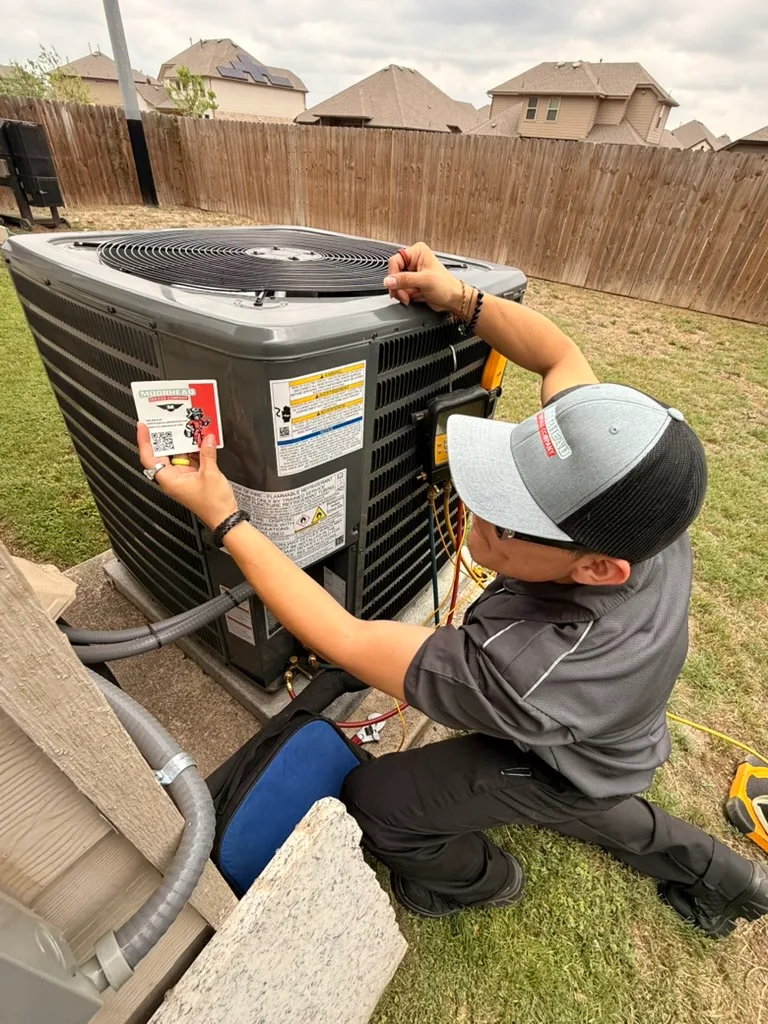
How to spot a bad one. A real tune-up needs the system running for 15 minutes or more just to read the refrigerant. If your invoice comes back with nothing but checkmarks and the word "inspected," and the tech was in and out in 15 minutes, you did not get a tune-up. You got a sales visit. Ask for the numbers.
How often should you service your AC in Texas?
Once a year is the floor - every reputable source agrees on that. In Texas, twice a year is the smarter call: spring for the AC before cooling season, fall for the heat before winter. The best time to book the spring visit is March through May, before the summer rush - partly because the system needs to be ready before the first 100-degree week, and partly because everyone calls at once in July and you do not want to be in that line.
Does skipping maintenance void your warranty?
Often, yes. Most major manufacturers require documented annual professional maintenance to keep the parts warranty valid, and a skipped service is a common reason a claim gets denied. We register the warranty on your behalf when we install a system and document every visit, so the paper trail is there if you ever need it.
What an AC tune-up costs
Ours is a flat $99 for the full 21-point service - written, no surprises. Nationally these run anywhere from $65 to $200, but the number that matters is what is on the invoice and whether the work behind it is real.
One tune-up, or the Comfort Club?
If you are going to do this every year anyway, the membership is usually the better math. A single tune-up is $99. The Comfort Club starts at $149 a year and includes the annual tune-up, no service-call fees, 10 percent off any repairs, priority scheduling in the spring rush, and a trade-in credit toward a future system. Two tune-ups a year, system monitoring, and bigger repair discounts come on the higher tiers. See the Comfort Club plans.
Why a Texas AC works harder
A system in New Braunfels runs close to half the year. That means it racks up the wear of a northern system in roughly half the calendar time - the capacitor, the contactor, the motor bearings all age on a Texas clock, not a Minnesota one. Once a year is the floor here, not the goal.
A real AC tune-up pays for itself in efficiency and in the expensive failures it heads off - but only if it is real. Look for measured numbers on the invoice, book it in the spring before the rush, and if you do it every year, the Comfort Club beats paying one-off. The version to be suspicious of is the 15-minute visit with nothing but checkmarks.
Due for a tune-up in New Braunfels, Seguin, or anywhere nearby? Call (830) 587-5790 or book online. For what a repair runs when something does break, see our AC repair cost guide.