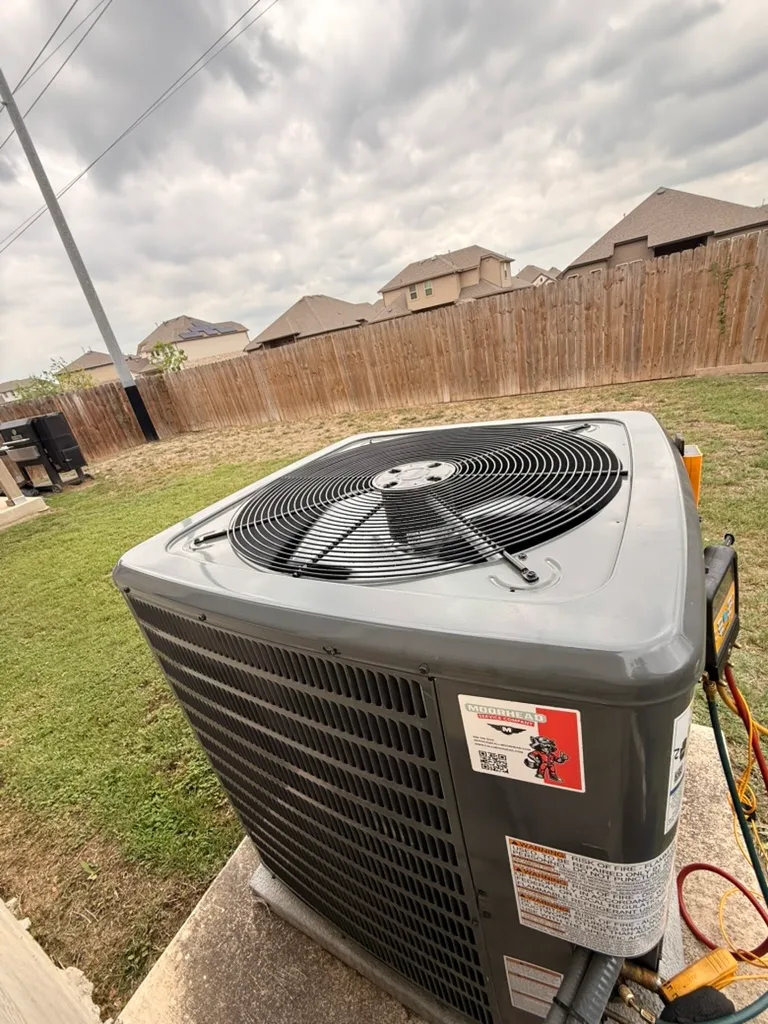
In a Texas climate a higher-SEER2 system is usually worth it, because your AC runs so many hours here that the efficiency pays back faster than it would up north. The honest catch is diminishing returns: the biggest savings come from replacing an old SEER 10-to-13 unit with a modern SEER2 15 or 16, and every step above that saves less for more money. For most homes the sweet spot is a solid mid-tier SEER2, not the most expensive unit on the shelf.
The efficiency number is the one part of a new AC that salespeople love to push, because a bigger number is easy to upsell. Here is the honest version: what SEER2 actually is, why efficiency matters more in Texas than almost anywhere, and where the savings stop being worth the extra money.
What SEER2 actually means
SEER stands for Seasonal Energy Efficiency Ratio. It measures how much cooling a system delivers for the energy it uses over a season, so a higher SEER means more cooling per watt. SEER2 is just the updated version the industry moved to in 2023, tested under tougher, more realistic conditions. The practical effect is that SEER2 numbers run a little lower than the old SEER numbers for the same unit, so do not panic when a modern "SEER2 15" looks smaller than the "SEER 16" you remember. It is the current standard, and it is the number on the yellow EnergyGuide sticker.
Why efficiency matters more in Texas
Here is the part the national charts miss. A SEER rating pays you back every hour the system runs, and your system runs an enormous number of hours here. An AC in New Braunfels works from roughly March into November, often flat out through the worst of July and August. A unit up north might run a few months a year. So the same efficiency upgrade that takes a decade to pay for itself in Ohio pays back much faster down here, simply because it is working so much more. That is why a higher SEER2 is usually worth it in Texas even when it would not be worth it somewhere cooler.
The tiers, side by side
| Old unit (SEER 10-13) | Mid-tier (SEER2 15-16) | High-tier (SEER2 17+) | |
|---|---|---|---|
| Efficiency | Low | High | Highest |
| Cooling cost | Baseline | Roughly 30-40% less | A little less than mid |
| Upfront cost | - | Moderate | Highest |
| Comfort extras | Basic | Often two-stage, quieter | Variable speed, quietest, best humidity |
| Best for | Replace it | Most Texas homes | Long-term, comfort-first homes |
A modern SEER2 system can cut the cooling side of your bill by roughly 30 to 40 percent over an old SEER 10-to-13 unit. That is the jump that pays. The jumps above it are smaller.
Diminishing returns, honestly
This is the part a quota-driven salesperson skips. Once you are into modern efficiency, each step up the SEER2 ladder saves less than the one before it, while the price keeps climbing. Going from an old unit to a SEER2 15 or 16 is a real, noticeable drop in your summer bill. Going from a 16 to a 20 is a much smaller drop that can take many years of Texas summers to pay back the price difference, if it ever does. Sometimes it is worth it and sometimes it is not, which is exactly the kind of thing you want an honest number on before you sign.
What matters as much as the number
Here is what nobody selling you a 20-SEER2 unit wants to dwell on: a high-efficiency system installed wrong will underperform a mid-tier one installed right. Three things move your real-world bill as much as the SEER2 rating:
- Correct sizing. An oversized system short-cycles and never pulls humidity, so it feels clammy and wears out early no matter how high the SEER2. We size to a load calculation, not the old unit's label.
- Sealed ductwork. A typical home loses 20 to 30 percent of its conditioned air to duct leaks. You can buy the most efficient condenser made and still pump a third of it into the attic.
- Maintenance. A dirty coil or a low charge drags a 17-SEER2 unit down to a 12 in a hurry. Efficiency you paid for only counts if the system stays clean and charged.

What it costs, and what we install
Efficiency is one lever on the price of a new system, along with size and type. Rather than quote a SEER2 tier off a chart, we run a load calculation, show you the payback math for a couple of options, and put a flat, all-in number in writing. Our lineup runs good, better, and best exactly along these efficiency tiers, and you can see the actual systems and installed pricing on our HVAC systems page. If you want to ballpark it first, the cost calculator gets you close.
So what SEER2 should you get?
For most Central Texas homes, a mid-tier SEER2 in the 15 to 17 range is the sweet spot: it captures the big efficiency jump over an old unit without paying steeply for the last few points. Go higher, into variable-speed 18-plus, if you are staying in the home long-term, you run the system especially hard, or you want the quietest operation and the best humidity control, which is a real comfort difference, not just a savings one. And if your current unit is a repairable mid-life system, the honest move might be to keep it a few more summers, the same way we lay out in the repair-versus-replace guide.
A higher SEER2 is usually worth it in Texas because your AC runs so many hours here. The big savings come from replacing an old SEER 10-to-13 unit with a modern SEER2 15 to 17, which can cut cooling costs 30 to 40 percent. Above that, the gains shrink and the price climbs, so the top tier is really a comfort upgrade. Size it right, seal the ducts, and keep it maintained, or the SEER2 number on the sticker will not show up on your bill.
Weighing efficiency for a new system in New Braunfels, Seguin, or the Hill Country? We will show you the honest payback and the right tier for your home, not the priciest unit on the truck. Call (830) 587-5790 or get a quote online. While you are deciding, our guides on heat pump vs gas furnace and mini-split vs central AC cover the other two big choices.