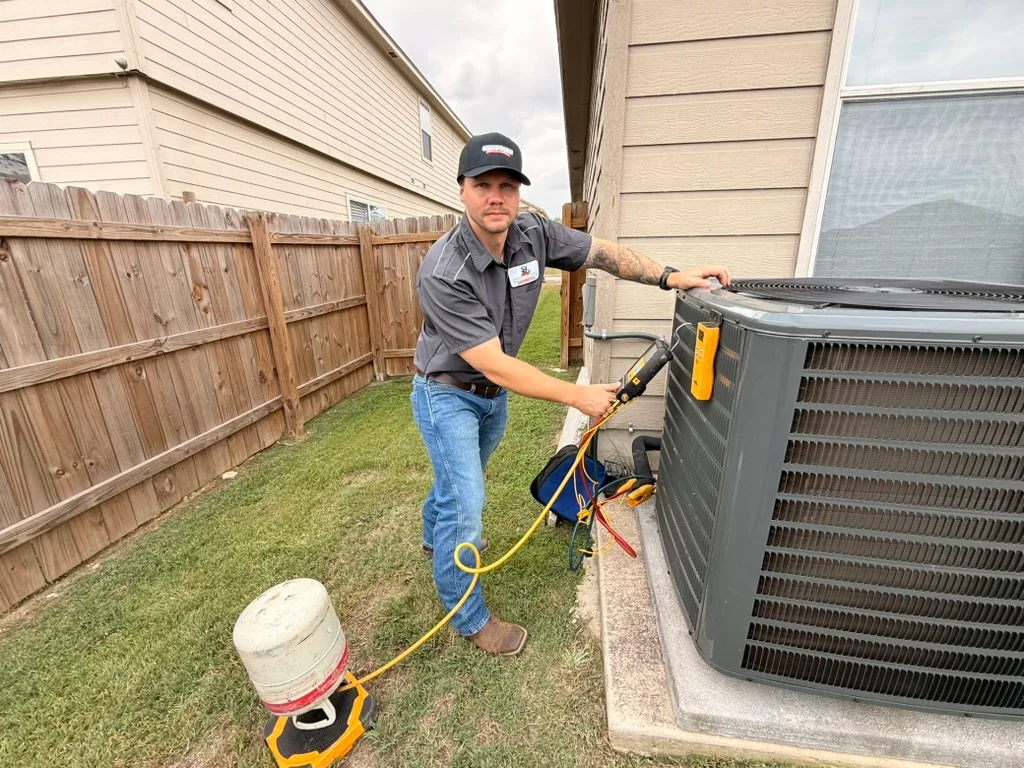
The honest answer to what size generator you need comes down to one thing more than any other: your air conditioner. Most Texas homes that want to keep the AC running through an outage land on a 22 to 26 kW air-cooled standby, or a smaller 18 to 22 kW unit paired with load management. If you only want the essentials - fridge, lights, outlets, the well pump - a 10 to 14 kW unit will do. The only way to size it right is a load calculation, not a wattage chart.
Nobody buys a standby generator for the joy of it. You buy one because the last outage was long enough, cold enough, or landed at exactly the wrong time, and you decided never again. So the real sizing question is simple: what do you want to still be running when the whole street goes dark? Answer that, and the kilowatts sort themselves out.
The short answer, by how much you want to back up
There are three honest tiers, and the right one depends on your goal, not on what the biggest unit on the shelf can do.
Most people around here who go standby want the AC to keep running - a Texas outage in August is not a candlelight-and-blankets situation - and that pushes them toward the top two tiers. Which is where your air conditioner takes over the math.
Why your air conditioner decides the size
Here is what a northern sizing chart gets wrong about a Texas house: your AC is both the biggest single load in the home and the biggest surprise. It draws a few thousand watts while it runs. But the instant the compressor starts, it grabs a much larger gulp - often three to five times its running draw - for a fraction of a second. That startup surge is what actually sets the size. A generator that can run your AC but can't start it is not much of a generator.
This is why we care about the compressor when we size a unit, and why a soft-start kit is sometimes the cheapest way to fit a bigger AC onto a smaller generator - it flattens that startup spike so the generator does not have to be built around one half-second of demand. Sometimes that trade saves you a whole unit size. We will tell you when it makes sense and when it does not.
The three ways to size it, in plain terms
1. Essential circuits - 10 to 14 kW
This is the smallest standby worth wiring in. It keeps the refrigerator cold, the lights on, the Wi-Fi up, the well pump running, and a couple of rooms comfortable. In a winter outage that is often plenty - you are keeping pipes from freezing and the family fed, not running the whole house. What it usually will not do is carry central AC through an August afternoon, which for a lot of people down here is the entire reason they started shopping.
2. Managed whole-home - 18 to 22 kW with load management
This is the sweet spot for a lot of Texas homes, and it is the part most sizing charts skip. Instead of buying a unit big enough to run literally everything at the same instant, you install a mid-size generator plus load management modules - small relays that watch the big loads and take turns. When the AC compressor kicks on, the module briefly drops the electric dryer or the oven so the generator is never asked to start everything at once. You get whole-home coverage, AC included, on a smaller and cheaper unit than brute force would need. (Your dryer pausing for ninety seconds during an outage is not a hardship. It is a feature.)
3. Full whole-home - 22 to 26 kW and up
If you want everything running at once with nothing shedding - central AC, electric range, dryer, well pump, pool equipment, all of it - you size up to a large air-cooled unit, 22 to 26 kW, or move to liquid-cooled above that. Big all-electric homes and homes with two AC systems land here. It costs more, and it is sometimes exactly right. We are not going to talk you out of it if that is what your house actually draws. We are just going to make sure it is the house talking and not the sticker.
Air-cooled or liquid-cooled?
Air-cooled standby units - the kind that sit on a pad about the size of an AC condenser - cover the large majority of homes, up to around 26 kW. Above that you are into liquid-cooled units, 27 kW to 48 kW and beyond, which are a different animal: bigger, pricier, and built for large homes, multiple AC systems, or light commercial. Most New Braunfels and Seguin homes never need to leave the air-cooled range. If someone is steering you toward liquid-cooled for an average three-bedroom, ask why before you sign.
Natural gas or propane - and the number nobody mentions
In town, where there is a natural gas line - most of New Braunfels and Seguin - gas is usually the simplest fuel, because the unit runs as long as the gas keeps flowing and there is no tank to fill. Out in the Hill Country, on a well with no gas main, propane from an on-site tank is the answer, and a good-sized tank runs a unit for days at partial load.
Two honest wrinkles most sales pitches skip. First, a generator rated at a given size on propane puts out a little less on natural gas, because natural gas carries less energy per cubic foot - reputable sizing accounts for that, so do not size off the propane number if you are running gas. Second, the gas has to arrive fast enough; a larger unit sometimes needs the gas meter or the line upsized, which the utility handles, and which we flag up front instead of on install day.
Don't size it off the sticker
The wattage chart on the big-box shelf is written for a generic house in a mild climate. Yours is neither. A standby generator has exactly one job - it works when the grid does not - and everything else, the app, the exercise cycle, the badge on the lid, is secondary to whether it starts and carries your house at 3 a.m. in a hard freeze.
That is why sizing is not a place to guess. Guess high and you spend thousands of dollars on capacity you will never call on. Guess low and the first time the AC and the well pump start together, the whole thing sags and stalls - which is the one moment it was bought to prevent. The number that is actually right comes from a load calculation: we add up what you want to run, account for the startup surges, look at your panel and your fuel, and size to that. It is why we do not quote a generator off a price chart. We come out, do the assessment and the load calc for free, and put a flat number in writing before any work starts. As a Generac dealer and a licensed electrician under one roof, we size it and wire it ourselves - no subcontracted second trade, no finger-pointing if something is off.
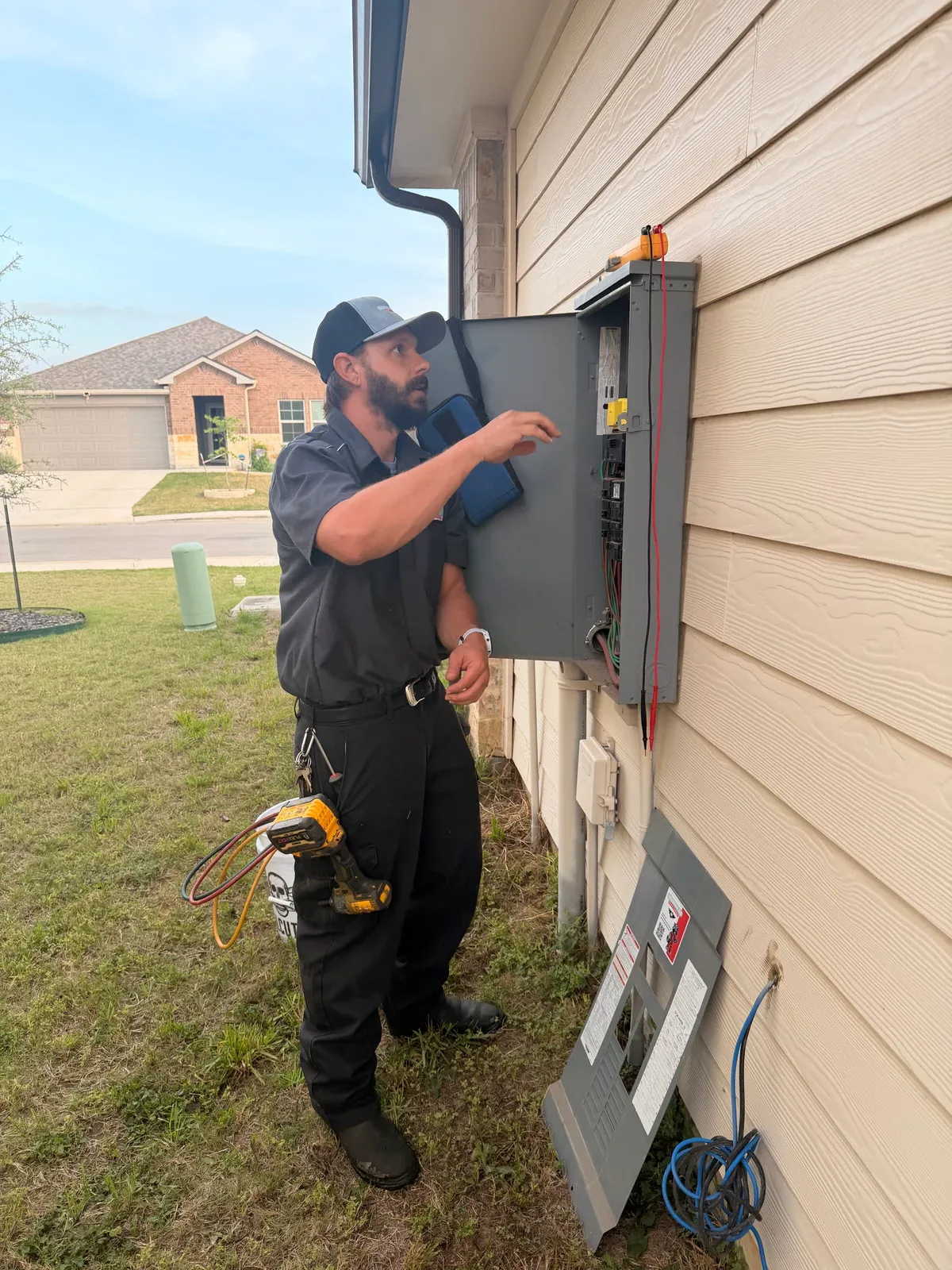
Size it to what you want running when the grid quits. Essentials only is 10 to 14 kW. Most Texas homes that want the AC too land on 18 to 22 kW with load management, or 22 to 26 kW to run everything at once. Your AC's startup surge sets the size, natural gas puts out a little less than propane, and the only reliable number comes from a load calculation - not a wattage sticker.
Trying to figure out what size generator your home in New Braunfels, Seguin, or the Hill Country actually needs? We will do the load calc and tell you straight - the honest size, not the biggest one. Call (830) 587-5790 or see our electrical services. If you are still deciding whether a standby is worth it in the first place, we laid out that case here: is a whole-house generator worth it in Texas. And if your lights already flicker or a breaker trips when the AC starts, that is worth sorting out before any generator goes in - here is what a tripping breaker is telling you.