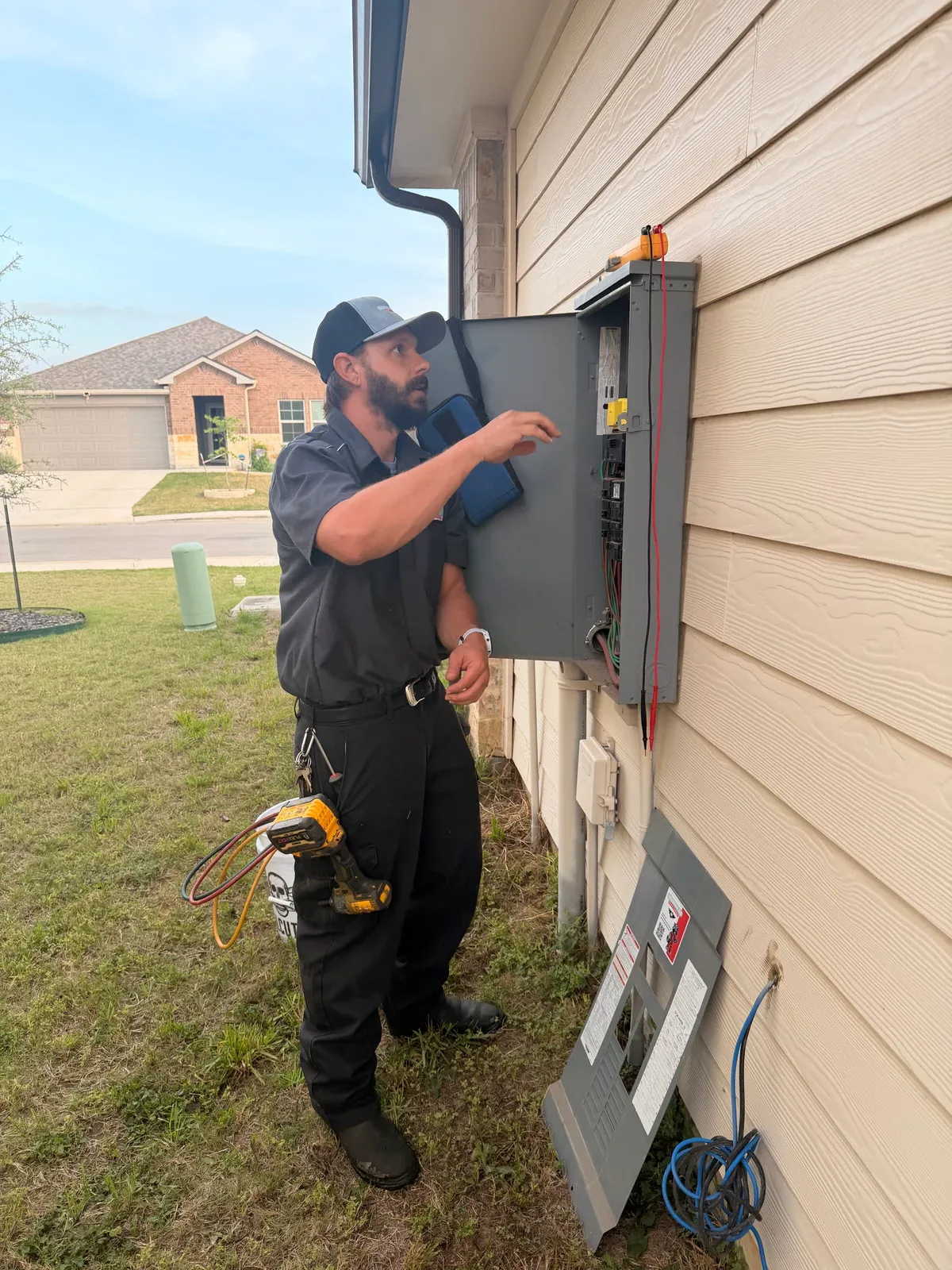
A whole-house standby generator is worth it if you lose power often or for long stretches, run a well or sump pump, depend on medical equipment, or work from home - the kind of outage the Texas grid handed everyone during Winter Storm Uri. If your power only blinks out for an hour once or twice a year, the honest answer is that a portable unit will probably do.
It is a real expense, so it deserves a real answer - not a sales pitch. Here is the honest version: what a standby generator does, when it is worth it, when it is not, and why so many homes around here added one after 2021.
Standby vs. portable - the honest comparison
A standby generator is wired into your home and sits outside on a pad. When the power drops, an automatic transfer switch starts it within seconds, and it runs on natural gas or propane - no cords, no refueling, no being awake at 3 a.m. to start it. It can carry the whole home, air conditioning included. A portable is a fraction of the price and covers a few circuits, but you have to drag it out, start it, run extension cords, and keep feeding it gasoline.
The part nobody likes to say plainly: portable generators are dangerous when people treat them as indoor appliances. After Uri, Justin got called out to a home in Marion where a family had been running a 5,500-watt portable inside a closed garage during the outage, with no carbon monoxide detector in the house. The generator was venting straight into the structure through the gap by the door. He installed hardwired, interconnected CO detectors throughout the house and walked them through the 15-foot rule for placement. They sent a Christmas card that year. He keeps it on the workbench.
Carbon monoxide is invisible and it kills fast. A portable run too close to the house is the most common way a generator hurts the people it was supposed to help. A standby unit, professionally installed and permanently vented outside, takes that risk off the table - which is the real argument for it, not just the convenience.
Is it worth it? The decision factors
It is worth it when an outage is more than an inconvenience:
- You lose power often, or for long stretches
- You are on a well pump - no power means no water, which is common out in the Hill Country
- You have a sump pump and an outage during a storm means a flooded slab
- Someone in the house depends on medical equipment - a CPAP, oxygen, refrigerated medication
- You work from home and cannot afford to go dark
- A full fridge and freezer you would rather not lose
And the honest other side - it is probably not worth it if your outages are rare and short, a few hours once or twice a year, and you do not have a well, a sump, or a medical load. A $500 to $2,700 portable and a manual transfer switch will cover the essentials for a lot less money. We will tell you that if that is your situation.
What size do you need?
Roughly: a 10 to 14 kW unit covers the essentials, 16 to 22 kW carries most whole homes, and 24 kW and up handles a large home with a pool or an EV charger. The Texas wrinkle is the air conditioning - a northern sizing chart will undersize a unit here, because your AC is a large electrical load running most of the year. That is exactly the kind of thing a load calculation sorts out before anyone quotes you a number. We go deep on the math in what size generator do I need.
Natural gas or propane?
If you have a natural gas line - most homes in town in New Braunfels and Seguin do - that is usually the simplest answer, because it runs as long as the gas keeps flowing. Out in the rural Hill Country where there is no gas line, propane from an on-site tank is the move; a large tank will run a unit for days at partial load.
The Texas grid is its own animal
Texas runs its own power grid, separate from the rest of the country, which limits how much power it can borrow from neighbors when things go wrong. That is the structural reason Winter Storm Uri in February 2021 was as bad as it was - millions of homes without power for days in a hard freeze, and an official death toll of 246. It is the week a lot of people around here decided they never wanted to be at the mercy of the grid again. Summers bring the other version of it: conservation alerts when demand climbs and everyone's AC is running at once. A standby generator is one job, done well - it works when the grid does not.
Owning one
A standby unit needs an oil change every couple hundred run-hours and a periodic check, and it should last 15 to 25 years with that care. We set up Mobile Link monitoring so we can see a problem before it becomes a failure - not because the app is a selling point, but because a generator that fails the one time you need it is worse than no generator at all.
What it costs
The honest answer is that it depends - on the size, the fuel, how far the gas line and the electrical have to run, and the transfer switch. So we do not quote a generator off a price chart. We come out, do a free assessment and a load calculation, and put a flat number in writing before any work starts. As an authorized Generac dealer and a licensed electrician under one roof, we size it and wire it ourselves - no subcontracted second trade.
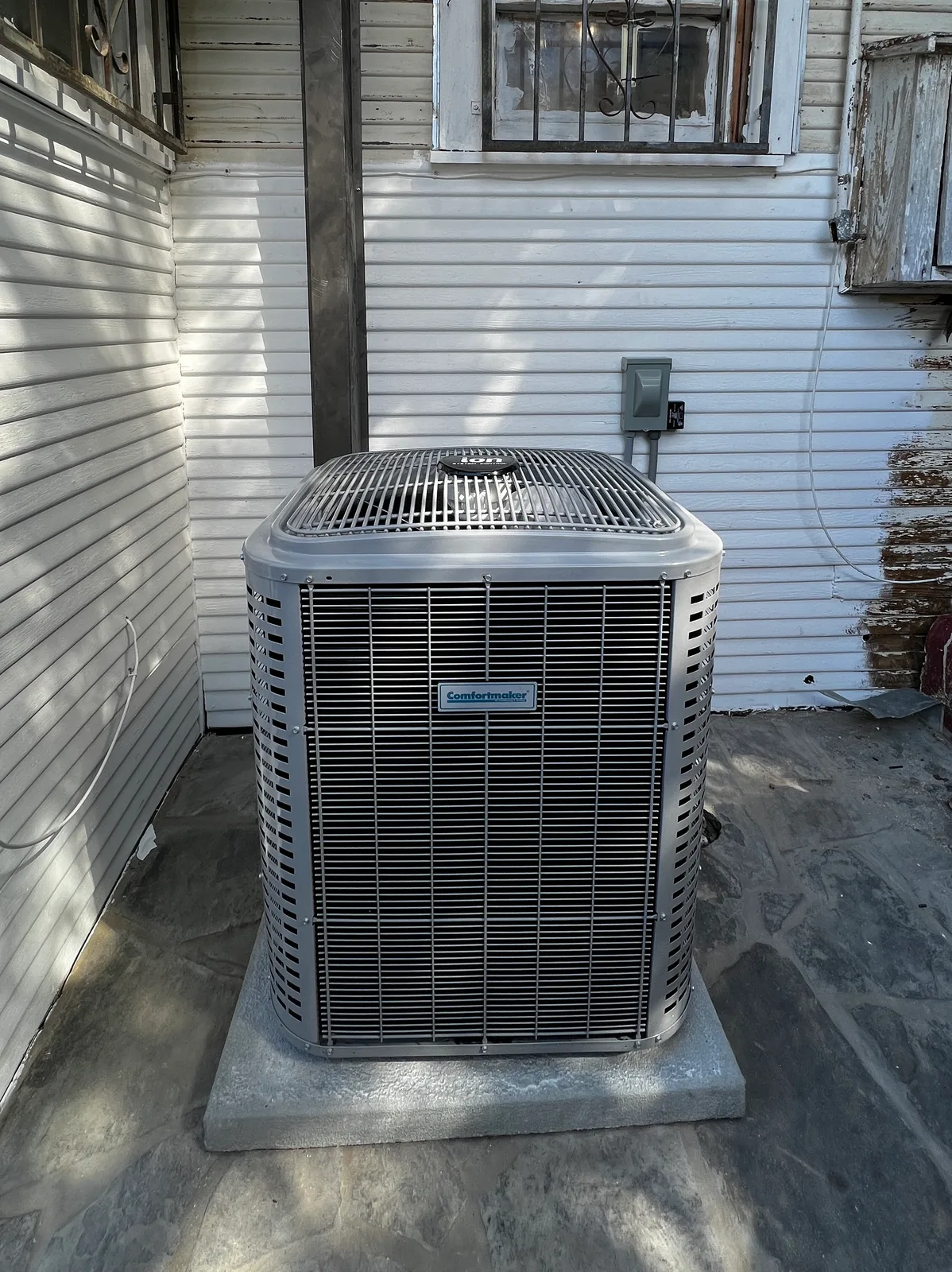
A whole-house standby is worth it if you have a well, a sump, medical equipment, remote work, or a history of long outages - and it takes the carbon-monoxide risk of a portable off the table. If your outages are rare and short, a portable is the honest call. Size it to your AC load, run it off gas in town or propane in the country, and get the install quoted flat after a real assessment.
Wondering if a standby generator makes sense for your home in New Braunfels, Seguin, or the Hill Country? Call (830) 587-5790 or see our electrical services. While you are thinking about backup power, it is worth knowing when a tripping breaker means your panel needs attention, too.