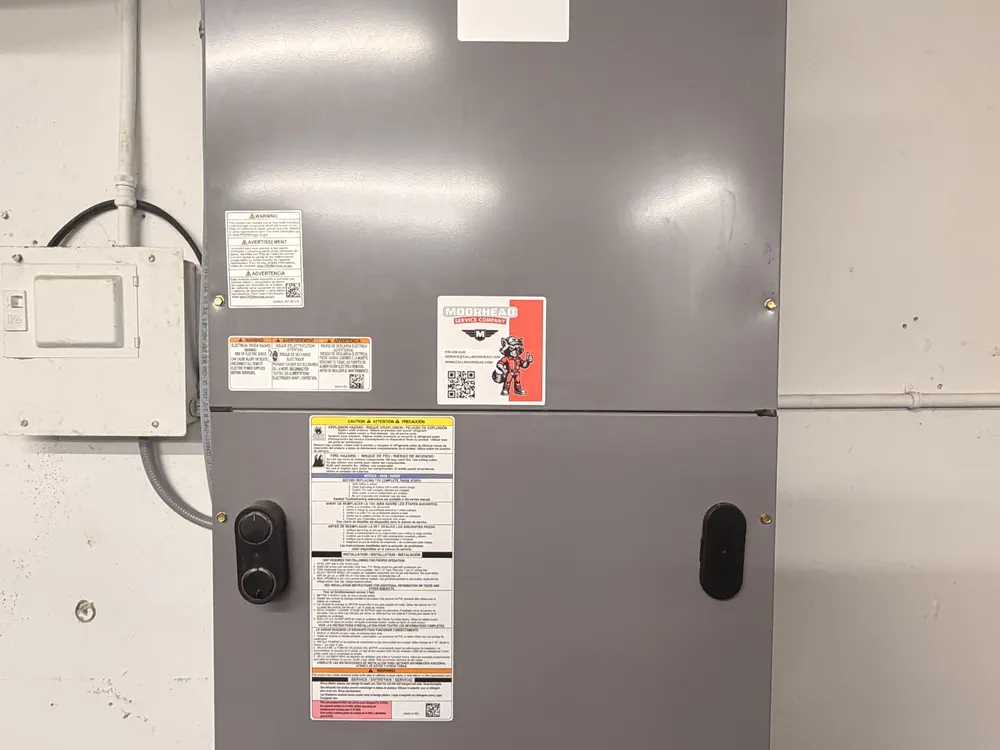
A heater blowing cold air is most often the thermostat fan set to 'On' instead of 'Auto,' which runs the blower between heating cycles and pushes room-temperature air through the vents. The other usual suspects are a dirty filter tripping a safety shutoff, a dirty flame sensor on a gas furnace, or - if you have a heat pump - a normal defrost cycle that clears in a few minutes.
First, the 30-second triage
Half of all "cold air" calls end right here, and it costs you nothing.
- Set the thermostat fan to AUTO, not ON. On AUTO the blower only runs when the system is actually making heat. On ON it runs nonstop - including the long gaps between cycles, when it just blows cool room air.
- Make sure the mode is on HEAT, and bump the setpoint three to five degrees above the room temperature.
- Give it two minutes. On startup, the first air out of the vents is the cool air that was sitting in the ducts - it warms up shortly.
Do you have a furnace or a heat pump?
The fix depends entirely on which you have, and a lot of people genuinely do not know. Quick way to tell:
- Gas furnace: there is a gas line to it, it lives in a closet, attic, or garage, and the outdoor AC unit sits quiet all winter.
- Heat pump: it is all electric, the outdoor unit runs in winter to make heat, and the thermostat has an EM HEAT (emergency heat) setting.
In central Texas you will find both in large numbers - heat pumps especially, because our winters are mild enough that they make sense most of the year.
Gas furnace blowing cold air
A dirty filter tripping the safety
A clogged filter chokes the airflow, the heat exchanger overheats, and a safety switch shuts the burners off to protect the furnace - but the blower keeps running, so you get cold air. Replace the filter. If it keeps happening after a fresh one, the airflow problem is deeper and needs a look.
A dirty flame sensor - the common, cheap one
This is one of the most common reasons a furnace lights and then quits a few seconds later, blowing cold. The flame sensor is a thin metal rod that confirms the burners actually lit; when it gets coated in residue, it cannot sense the flame, so the control board shuts the gas off as a safety. Cleaning or replacing it is usually one of the cheapest furnace repairs there is.
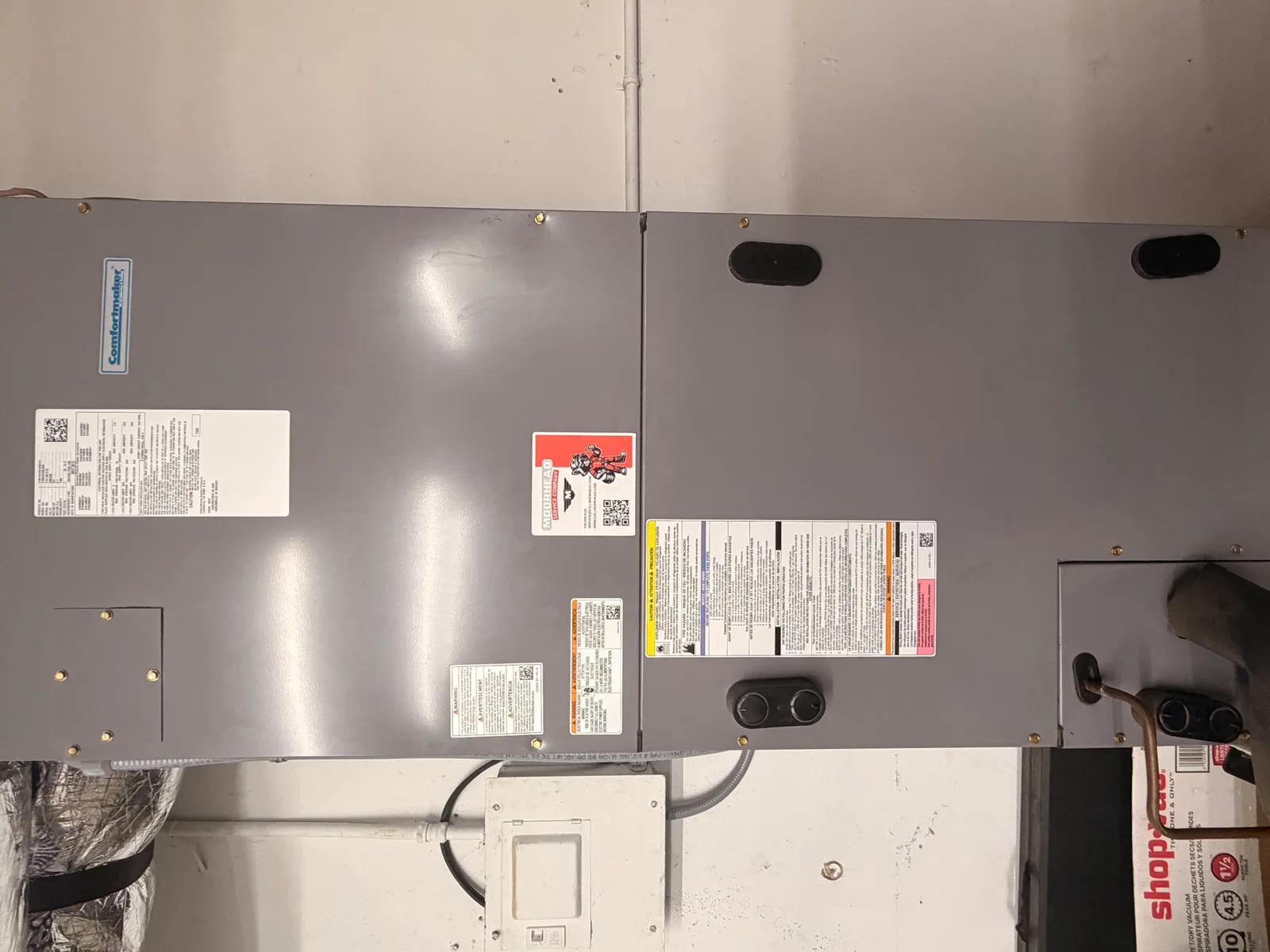
Pilot light, ignitor, or gas supply
Older furnaces have a standing pilot that can blow out. Newer ones use a hot-surface ignitor that cracks with age, so the burners never light at all. And a closed gas valve or supply issue will leave the fan running with nothing to heat the air. Some of this you can check; the ignitor is a pro part.
The safety one - flue, condensate, or heat exchanger
A high-efficiency furnace has a condensate drain that, when clogged, trips a float switch and shuts everything down. More seriously, a blocked flue or a cracked heat exchanger triggers a safety lockout - and a cracked heat exchanger is also a carbon monoxide concern. If you smell anything off, feel ill when the heat runs, or your CO alarm sounds, leave the house and call from outside. That one is not a wait-and-see.
Heat pump blowing cool air: usually normal, sometimes not
It is probably defrost - and that is normal
When it is cold out, a heat pump periodically reverses itself for a few minutes to melt frost off the outdoor coil. During that window it blows cool air indoors and you may see what looks like steam rising off the outdoor unit. Both are normal. It runs five to fifteen minutes and goes back to heating. It is only a problem if it never recovers.
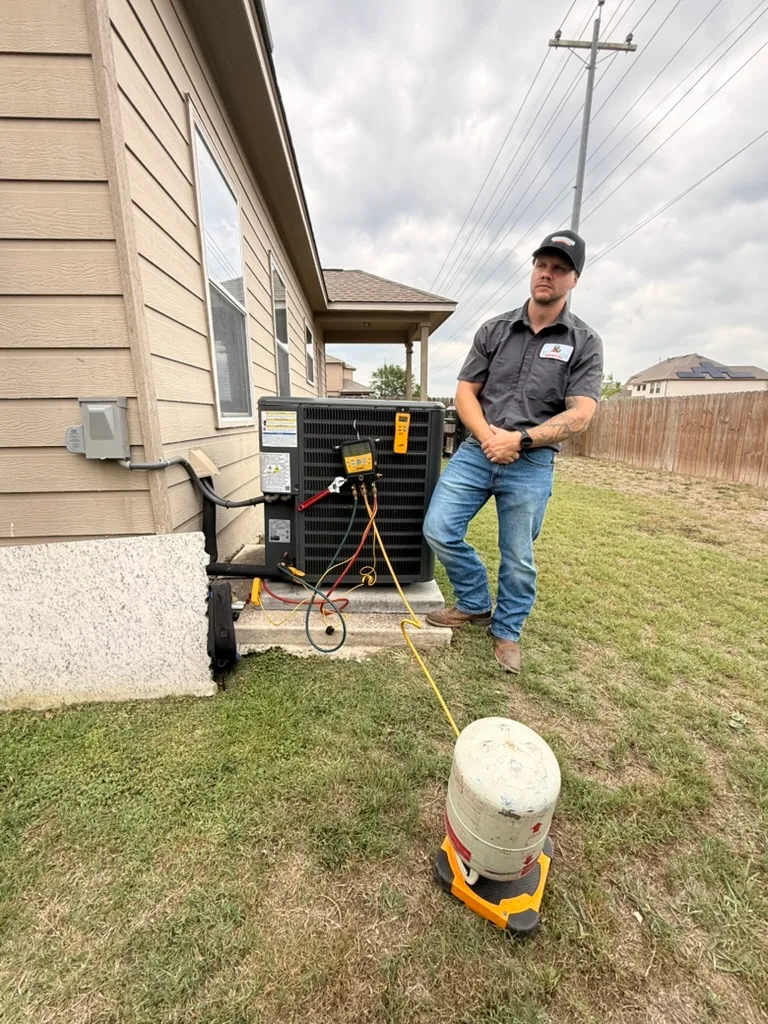
The air feels cool but is actually warm
A heat pump delivers air around 85 to 92 degrees. That is well below your body temperature, so it feels cool at the vent even though it is heating the house. A gas furnace blows hotter, around 130, which is why people switching to a heat pump think something is wrong when nothing is.
Emergency heat, an iced unit, or a real fault
If someone flipped the thermostat to Emergency Heat, it is bypassing the efficient heat pump and running backup strips - fix is to switch it back. If the outdoor unit is iced solid or buried in debris, it cannot pull heat from the air. And low refrigerant or a stuck reversing valve will leave it blowing cool - those last two are a service call.
Texas winters: what is different here
Most of the year our winters are mild, which means the large majority of "my heat is blowing cold" panic is one of two harmless things - the fan set to ON, or a heat pump in its normal defrost. Then every few years a hard freeze rolls through, the kind that ices heat pumps over and leans hard on backup heat. That is the week Emergency Heat actually earns its name. The rest of the time, leave it on AUTO heat and let the system do its job.
When to call a pro
- The furnace keeps tripping its safety after a fresh filter
- It will not ignite at all, or lights and quits over and over
- You suspect low refrigerant or a reversing valve on a heat pump
- The outdoor unit is iced solid after a couple of cycles
- Any gas smell, burning smell, or a CO alarm - leave first, call second
Every visit starts with a flat $79 diagnostic and a written price before we touch anything - furnace or heat pump, we work on both. See our heating services or request a visit. The cooling-season version of this is in our AC running but not cooling guide.