
If your AC is running but not cooling, the cause is usually simple: a clogged air filter, a thermostat set to the wrong mode, or an outdoor unit choked with grass and dirt. The harder culprits - low refrigerant from a leak, a frozen coil, a failed capacitor, or a dying compressor - need a licensed tech, and in 100-degree New Braunfels heat you should not keep running a unit that's iced up or losing refrigerant.
Here are the causes ranked from most common to least, simple to serious. Work down the list - the first four you can check yourself in about ten minutes.
- Dirty air filter - a clogged filter starves the system of airflow, so it runs but can't move enough cool air. The number-one cause, every time. DIY
- Thermostat set wrong - set to "Fan / On" instead of "Cool / Auto," set above room temp, or the batteries are dead. The blower runs; the compressor never gets the call. DIY
- Dirty outdoor unit - grass clippings, dirt, and cottonwood pack the condenser coil so it can't dump heat outside. DIY
- Closed or blocked vents - furniture over a return, half the registers shut. The air's being made; it just isn't getting to the room. DIY
- Frozen evaporator coil - low airflow or low refrigerant drops the indoor coil below freezing and it ices over. Yes, in July. Pro
- Low refrigerant from a leak - refrigerant carries the heat out of your house. If it's low, you have a leak, and the system runs forever without ever satisfying the thermostat. Pro
- Failed run capacitor - the soup-can-sized part that starts the compressor. When it dies, the outside fan may spin but the compressor won't kick on - so you get warm air. Pro
- Bad contactor or tripped breaker - the outdoor unit loses power while the indoor blower keeps running. Pro
- Failing compressor - the heart of the system. If it's going, the unit runs but can't pump heat out. The expensive one. Pro
- Leaky or undersized ducts - a fifth of your cool air can leak into the attic before it reaches a vent. Pro
First, do these five things right now
Before you call anyone, run through this. Half the "not cooling" calls we get end here, and it costs you nothing.
- Check the thermostat. Set it to Cool and Auto (not "On"), and drop it five degrees below the room temperature. If the screen's blank, change the batteries.
- Pull the filter. If you can't see light through it, replace it. In a Texas summer that's a once-a-month job, not once-a-season.
- Look for ice. Check the copper lines at the outdoor unit and the indoor coil if you can see it. Frost or ice means shut the system off - running it frozen wrecks the compressor.
- Check the breaker. Find the AC breaker in your panel. If it's tripped, reset it once. Once. If it trips again, stop and call.
- Feel the air. Hold your hand at a supply vent, then at the return. Weak air everywhere points to airflow; warm air with strong flow points to refrigerant or the compressor.
The simple stuff you can check yourself
1. A dirty air filter (start here)
A choked filter is the most common reason an AC runs without cooling, and it's the cheapest fix on this page. When the filter clogs, the blower can't pull enough air across the coil. The system runs and runs, the air that does come out is weak, and on a bad enough clog the coil freezes solid. Replace it. If you've never found your filter, it's behind the return grille on a wall or ceiling, or in a slot at the air handler. Check it monthly in summer down here - a $12 filter is the cheapest insurance in your house.
2. The thermostat is set wrong
It sounds too simple to be the problem. It is regularly the problem. "Fan / On" runs the blower full-time without cooling, so warm air blows from the vents and people swear the AC is broken. Set it to Cool and Auto. Dead thermostat batteries do the same thing. We have driven across two counties to change two AA batteries. We would rather you check first - but we'll never make you feel bad about the call.
3. The outdoor unit is choked with debris
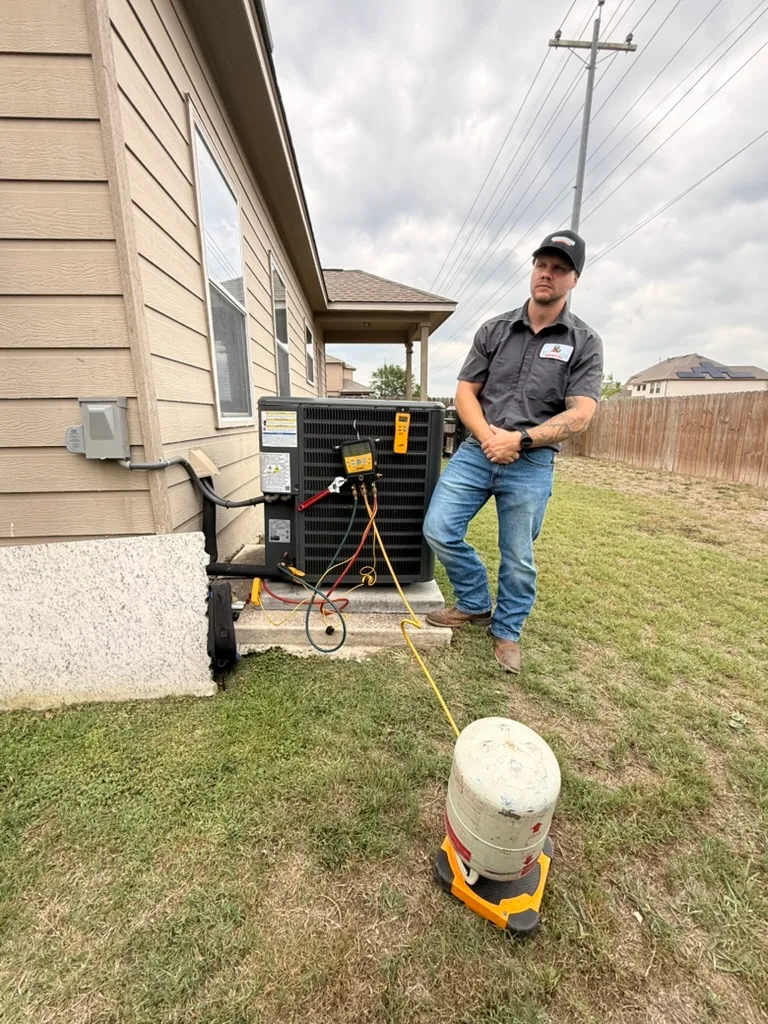
The outdoor condenser's whole job is to dump your house's heat into the air outside. Wrap it in grass clippings, dirt, and a season of cottonwood and it can't. Cut the power at the disconnect, then rinse the fins from the inside out with a garden hose - gentle pressure, never a pressure washer, the fins bend if you look at them wrong. Clear two feet of breathing room around the whole unit while you're back there.
4. Closed vents and blocked returns
Closing vents to "push air upstairs" doesn't work the way people hope - it raises pressure in the ducts and drops your total airflow. Open them. Pull the couch off the return grille. The system makes the cold air fine; it just needs a clear path to deliver it.
The causes that need a licensed tech
If you've replaced the filter, fixed the thermostat, rinsed the outdoor unit, and the house still won't cool - you're past the DIY line. Here's what we're actually looking for when we show up, so you know what you're paying for.
5. A frozen evaporator coil - and why it happens in 100° heat
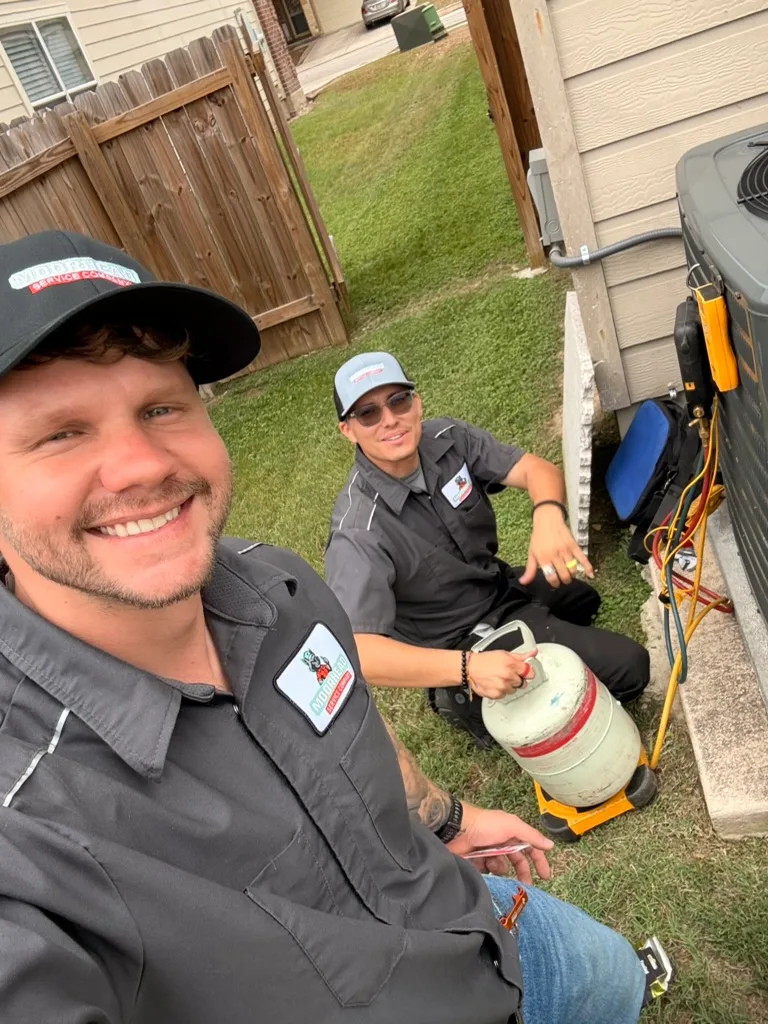
This is the one that confuses everyone: the AC freezes into a block of ice on the hottest day of the year. It happens because cold refrigerant plus too little airflow - from that dirty filter, a weak blower, or a low charge - drops the coil below 32 degrees, and the humidity in the air freezes onto it. Once it's iced, no heat transfers, and you get warm air. The fix starts with shutting it off and running just the fan to thaw it (one to three hours), but the ice is a symptom. If it freezes again after a fresh filter, the real cause is airflow or refrigerant, and that's a service call - here's the full breakdown of why an AC freezes up and what to do.
6. Low refrigerant - and why a recharge is not a repair
Here's the part most companies won't tell you: refrigerant does not get used up. It's a sealed loop. So if your system is low, it isn't "due for a top-off" - it has a leak, and the only honest fix is to find the leak and seal it.
We get this call a few times a season. A customer in New Braunfels or Seguin says the AC "keeps losing refrigerant." Two other companies have already recharged it over the last 18 months, three to four hundred dollars a visit, and neither one found the leak. It cools for a few weeks and fades again. The leak is almost always a hairline seep in the evaporator coil - you find it with UV dye and a blacklight or a refrigerant sniffer, or by knowing to look there in the first place.
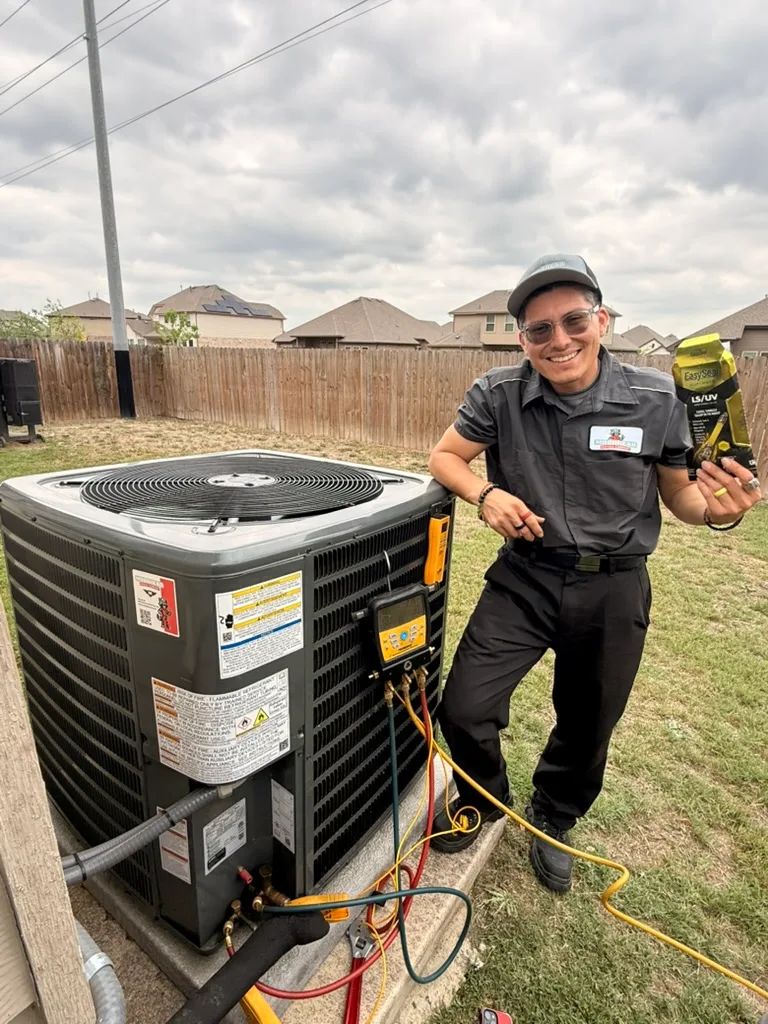
So at Moorhead, recharge-only isn't something we offer. If you're low, we find the leak, show you where it is, and quote the fix in writing before we touch it. That's the whole reason the company exists. See how we handle AC repair in New Braunfels.
7. A failed run capacitor - the cheap, common one
The most common real repair we make all summer isn't a leak or a compressor. It's a capacitor - a part about the size of a soup can that gives the compressor and fan motor the jolt they need to start. They fail in heat, always in heat, usually on the hottest Friday afternoon of July when the system's been running flat-out for three weeks. The tell: the outdoor fan spins but the compressor hums and won't start, so you get warm air. We carry them on the truck in several ratings. The repair takes about forty minutes and the house is cool before dinner.
8. A failing compressor - the expensive one
The compressor is the heart of the system, and when it's dying the unit runs but can't move heat - often with warm air, hard-start clicking, buzzing, or a breaker that keeps tripping. This is the one repair where the honest answer is sometimes "don't." On a system that's ten or more years old, where the repair runs past half the cost of a new unit, replacement is the smarter money. We'll lay both numbers in front of you and tell you which one we'd choose if it were our house. Sometimes that's the smaller invoice. See our cooling and replacement options.
9. A bad contactor, tripped breaker, or electrical fault
Sometimes the indoor side runs fine while the outdoor unit is dead - a tripped breaker, a pitted contactor (the relay that switches power to the compressor), or a corroded disconnect. Reset a tripped breaker once. If it trips again, that's the breaker telling you something's drawing too much current, and you want a tech, not a second reset. Being a licensed electrician and HVAC shop under one roof, we can chase a fault from the thermostat all the way back to the panel.
10. Leaky or wrong-sized ductwork
Your equipment can be perfect and the house still won't cool if the ducts leak twenty to thirty percent of the air into the attic, or the system was undersized for the square footage to begin with. If some rooms cool and others don't, that's usually duct balance. If the whole house never quite gets there on the hottest days, the system may be too small. Not sure what size you actually need? Get a free sizing estimate.
When to turn the AC off - and the 3-minute rule
Turn it off and leave it off if you see ice on the lines or coil, smell something burning, hear grinding or hissing, or the breaker keeps tripping. Running a frozen or refrigerant-starved system is how a $300 repair becomes a $3,000 compressor.
And whenever the system shuts off - power flicker, breaker, thermostat - wait a full three minutes before it restarts. That's the 3-minute rule: the compressor needs time for internal pressures to equalize, and slamming it back on against high pressure can lock the rotor or burn the windings. Most modern thermostats build in this delay. If yours doesn't, give it the three minutes yourself.
What this actually costs in 2026
We're one of the only shops around here that publishes real numbers, so here they are. Every price is flat-rate, written, and approved before we start - no "starting at," no surprise on the invoice.
| Repair | What's included | Typical range |
|---|---|---|
| Service call & diagnosis | Full diagnosis + written quote (waived when you book the repair) | $79 |
| Run capacitor | Part on the truck, electrical test, run verification | $150-$350 |
| Refrigerant recharge | Includes leak check - we don't recharge without finding the leak | $200-$600 |
| Contactor replacement | Electrical test + run verification | $175-$375 |
| Drain line clear & flush | Condensate pan treatment included | $100-$200 |
Ranges drawn from current Moorhead flat-rate pricing; your exact price is quoted in writing on-site before any work begins.
R-410A vs. R-454B: what it means if your system is leaking in 2026
If a tech tells you your leaking system "can't be fixed because of the refrigerant change," get a second opinion. Here's the real situation. Systems built before 2025 run on R-410A, which is being phased down nationally, so new equipment now ships with R-454B (an A2L refrigerant). The phase-down is making R-410A more expensive to buy as supply tightens - but servicing and recharging an existing R-410A system is still completely legal, and we still do it every week.
What you can't do is pour R-454B into an R-410A system - different pressures, and the A2L refrigerant needs equipment designed for it. So the honest decision tree is simple: a newer R-410A system with a fixable leak gets fixed. An old R-410A unit that's leaking, ten-plus years old, and facing a repair north of half the replacement cost is when we start talking about a new system - not before.
Check the filter, thermostat, and outdoor unit first - that's half of all "not cooling" calls. Ice on the lines or a breaker that keeps tripping means shut it off and call. And if anyone's been "recharging" your AC without ever finding the leak, you've been paying a subscription, not buying a repair.
Running but not cooling in New Braunfels, Seguin, Canyon Lake, or anywhere in between? We answer 24/7 and quote flat-rate in writing before we start. Call (830) 587-5790 or request a quote online.